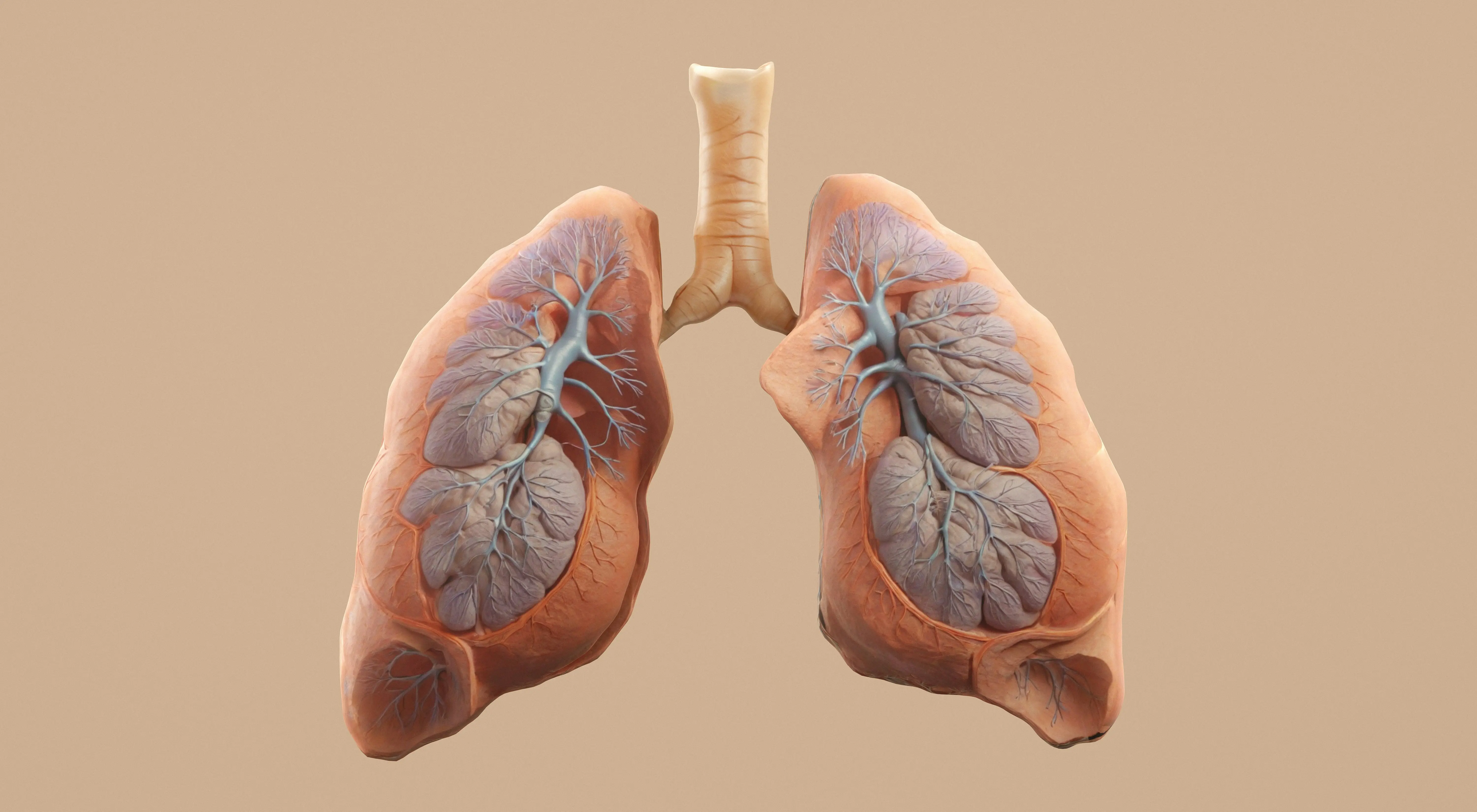
Interstitial Lung Disease (ILD) is a broad group of over 200 conditions that cause inflammation and scarring (fibrosis) of the lung tissue — the delicate interstitium that surrounds the air sacs. Unlike asthma or COPD, which primarily affect the airways, ILD damages the lung parenchyma itself, progressively impairing the lungs' ability to transfer oxygen into the bloodstream.
The symptoms of ILD often develop insidiously and are frequently misattributed to ageing, deconditioning, or cardiac disease. The hallmark is progressive exertional dyspnoea — breathlessness that worsens over weeks to months during activities that were previously effortless. A persistent dry cough, fatigue, and unintentional weight loss are common companions. In advanced disease, finger clubbing (bulbous swelling of the fingertips) and resting hypoxaemia (SpO₂ below 94%) may appear — both are important clinical red flags.
High-resolution computed tomography (HRCT) of the chest is the cornerstone of ILD diagnosis. Characteristic patterns — such as honeycombing and traction bronchiectasis in idiopathic pulmonary fibrosis (IPF), perilymphatic nodules in sarcoidosis, or ground-glass opacities in hypersensitivity pneumonitis — allow experienced radiologists and pulmonologists to narrow the differential significantly. Pulmonary function tests typically reveal a restrictive pattern with reduced diffusing capacity (DLCO), reflecting impaired gas exchange across the damaged interstitium.
Several distinct ILD subtypes require tailored management. Idiopathic pulmonary fibrosis (IPF) is the most common and aggressive fibrotic ILD; antifibrotic agents such as nintedanib and pirfenidone have been shown to slow the rate of lung function decline. Sarcoidosis — an immune-mediated granulomatous disease — may resolve spontaneously or require immunosuppressive therapy with corticosteroids or methotrexate. Hypersensitivity pneumonitis results from repeated inhalation of organic antigens (mould, bird proteins, agricultural dust) and demands rigorous antigen avoidance alongside medical treatment. Connective tissue disease-associated ILD (CTD-ILD), linked to rheumatoid arthritis, systemic sclerosis, and other autoimmune conditions, requires coordinated care between rheumatologists and pulmonologists.
Early referral to an ILD specialist is critical. Multidisciplinary discussion (MDD) — involving pulmonologists, radiologists, and pathologists — is the international gold standard for accurate subtyping and treatment planning. At New Umeed Healthcare & Care Hospital, Bathinda, comprehensive ILD evaluation including HRCT review, pulmonary function testing, and personalised management plans is available under the care of Dr. Anchal Jain.

Dr. Anchal Jain
Consultant Pulmonologist | Respiratory & Critical Care Specialist
New Umeed Healthcare & Care Hospital, Bathinda
Published by Dr. Anchal Jain
All Articles