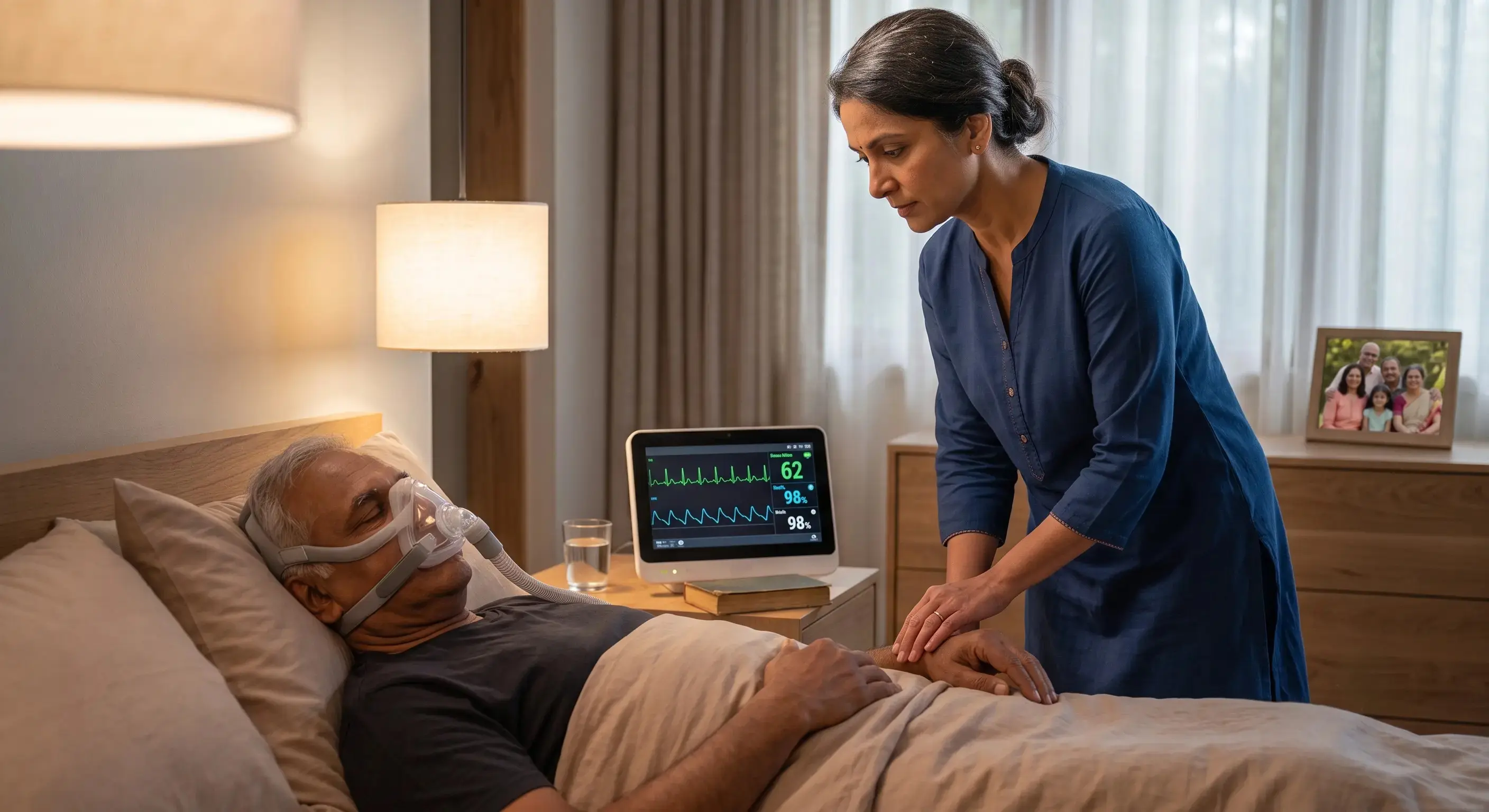
Obstructive Sleep Apnea (OSA) is far more than a snoring problem — it is a systemic condition with profound cardiovascular consequences that are only now being fully appreciated by the medical community.
During an apnoeic episode, the upper airway collapses repeatedly throughout the night, causing oxygen saturation to plummet and carbon dioxide to accumulate. The brain responds with a surge of sympathetic nervous activity, fragmenting sleep architecture and triggering micro-arousals that prevent restorative slow-wave and REM sleep. These repeated oxygen dips — sometimes occurring over thirty times per hour in severe OSA — place enormous strain on the cardiovascular system.
The cardiovascular consequences are well documented. Untreated OSA doubles the risk of hypertension that is resistant to pharmacological treatment. It is independently associated with a twofold increased risk of atrial fibrillation, and patients with OSA who suffer a first myocardial infarction have significantly worse outcomes than those without. Emerging evidence also links OSA to subclinical atherosclerosis, heart failure with preserved ejection fraction, and an elevated stroke risk.
Diagnosis requires a sleep study. An in-laboratory polysomnography (PSG) remains the gold standard, recording EEG, airflow, respiratory effort, oxygen saturation, and cardiac rhythm simultaneously throughout the night. For patients with a high pre-test probability and no significant comorbidities, a validated home sleep apnea test (HSAT) is an acceptable and more accessible alternative.
Continuous Positive Airway Pressure (CPAP) therapy is the most effective treatment for moderate-to-severe OSA. By delivering a pneumatic splint of pressurised air to keep the upper airway patent, CPAP eliminates apnoeic events, normalises oxygen levels, and — critically — has been shown in landmark trials to reduce nocturnal blood pressure and attenuate cardiovascular risk in adherent patients.
If you wake feeling unrefreshed despite an adequate sleep duration, experience excessive daytime sleepiness, or have a bed partner who notices pauses in your breathing or particularly loud snoring, a specialist evaluation is not optional — it could be life-changing.

Dr. Vishal Raj
Consultant — Pulmonary, Critical Care & Sleep Medicine
Pragma Medical Institute, Bathinda
Published by Dr. Vishal Raj
All Articles