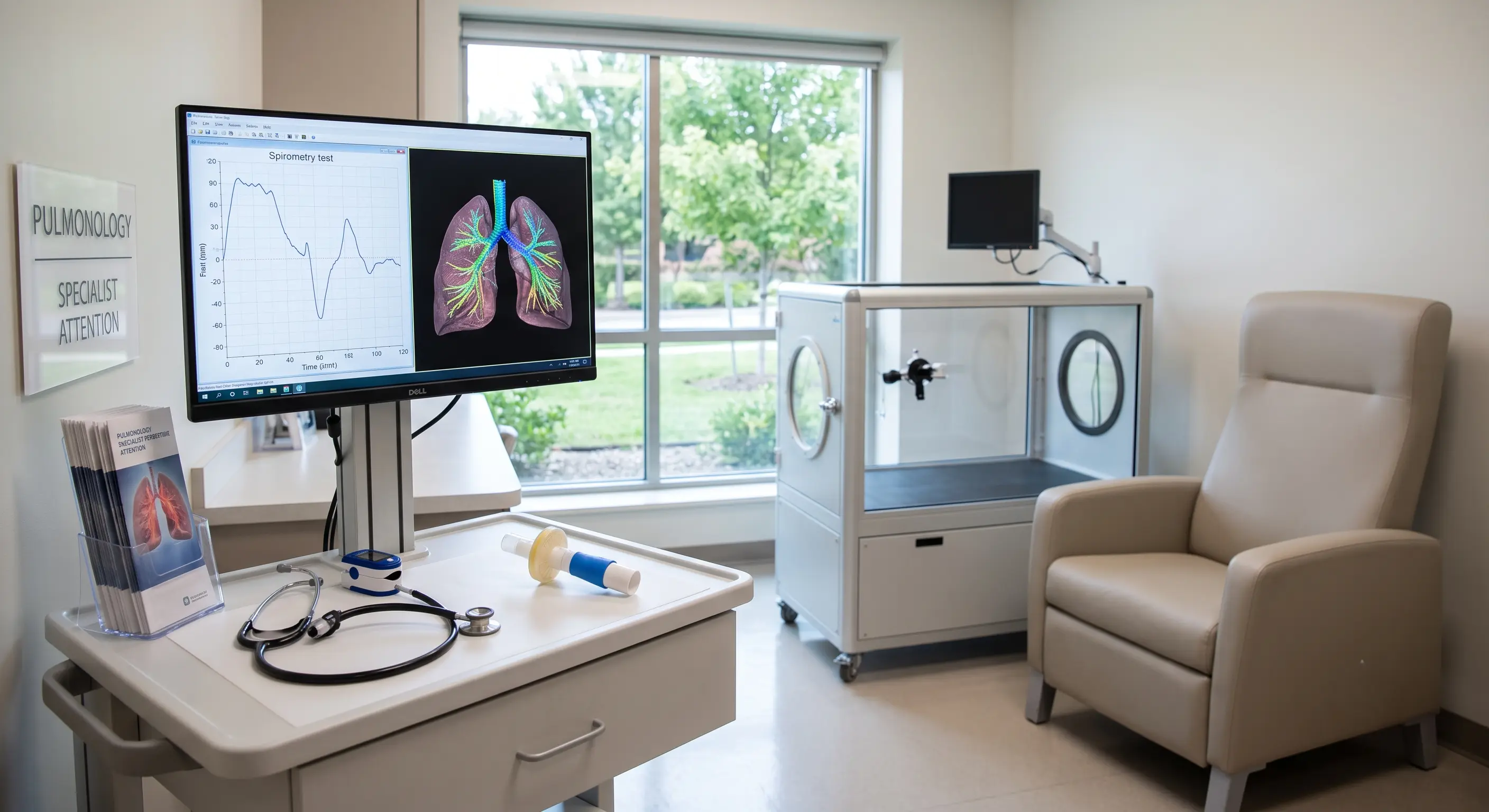
Primary care physicians do an outstanding job managing the vast majority of respiratory complaints. A cough from a viral upper respiratory infection, mild seasonal allergic rhinitis, or a single episode of community-acquired pneumonia rarely requires specialist input. But there is a subset of symptoms that should trigger an urgent or semi-urgent referral to a pulmonologist — a physician with advanced training in the diagnosis and management of complex lung disease.
Haemoptysis (Coughing Blood) Even a single episode of blood-streaked sputum warrants investigation. While the majority of cases in non-smokers are benign (e.g., bronchitis, bronchiectasis), haemoptysis in a current or ex-smoker over 40 must be presumed malignant until proven otherwise and demands urgent CT and bronchoscopy.
Unexplained Weight Loss with Breathlessness The combination of unintentional weight loss and progressive dyspnoea raises the possibility of lung malignancy, lymphoma, or an underlying systemic inflammatory condition with pulmonary involvement.
Recurrent Pneumonia in the Same Anatomical Segment Pneumonia that recurs in the same lobe or segment suggests a structural abnormality — a foreign body, an obstructing endobronchial lesion, or a bronchiectatic cavity — that requires bronchoscopic evaluation.
Oxygen Saturation Below 94% at Rest Resting SpO₂ ≤ 93% in a previously well individual is a clinically significant finding. It implies significant gas exchange impairment and may indicate interstitial lung disease, severe COPD, or pulmonary hypertension.
Progressive Dyspnoea Unresponsive to Standard Therapy When breathlessness continues to worsen despite appropriately dosed inhaler therapy and adequate management of comorbidities, a pulmonologist can deploy advanced diagnostics: high-resolution CT (HRCT), cardiopulmonary exercise testing (CPET), echocardiography with bubble contrast, or right heart catheterisation.
Clubbing of the Fingers Digital clubbing — bulbous swelling of the fingertips with loss of the normal angle at the nail bed — has a strong association with bronchiectasis, idiopathic pulmonary fibrosis, lung cancer, and chronic suppurative lung disease. It should never be dismissed as cosmetic.
A Persistent Cough Lasting More Than 8 Weeks Chronic cough has a wide differential including upper airway cough syndrome, gastro-oesophageal reflux, non-asthmatic eosinophilic bronchitis, and ACE-inhibitor side effects. When initial empirical treatment fails, specialist evaluation with FeNO testing, induced sputum, and a structured cough assessment protocol is indicated.

Dr. Vishal Raj
Consultant — Pulmonary, Critical Care & Sleep Medicine
Pragma Medical Institute, Bathinda
Published by Dr. Vishal Raj
All Articles